

What is the difference between inline and offline slitting lines?
Dec 22, 2025
Leave a message
As a supplier of slitting lines, I often encounter inquiries from customers about the differences between inline and offline slitting lines. Understanding these differences is crucial for businesses in the metal processing industry, as it can significantly impact productivity, efficiency, and overall cost - effectiveness. In this blog, I will delve into the key aspects that set inline and offline slitting lines apart.
1. Definition and Basic Concept
Inline slitting lines are integrated directly into the production process. They are designed to work in tandem with other machinery, such as rolling mills or coating lines. This means that the material, typically a metal coil, moves continuously through the production line and is slit at a specific stage without being removed and stored in between. For example, in a steel manufacturing plant, an inline slitting line can be set up right after the rolling process to immediately slit the newly formed steel coils into narrower strips.
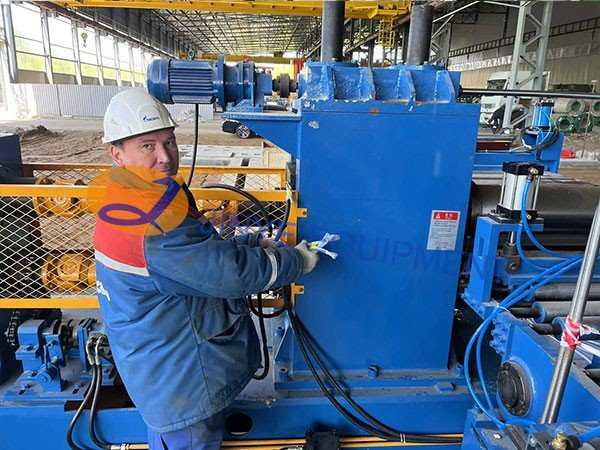
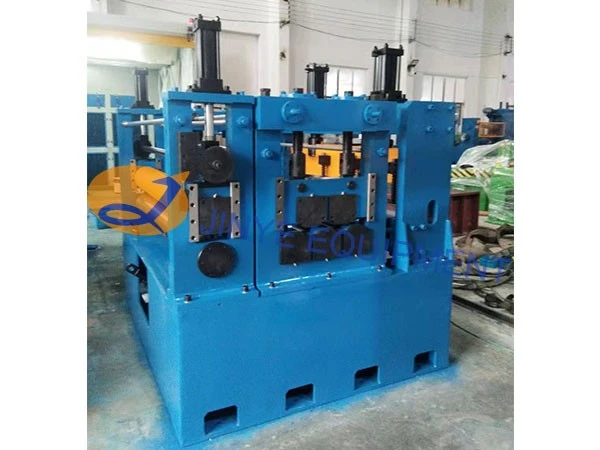
On the other hand, offline slitting lines operate independently of the main production line. The metal coils are first stored and then transported to the slitting line for processing. Once the slitting is complete, the slit strips are usually stored again before being used in subsequent manufacturing processes. This setup provides more flexibility in terms of scheduling and can be used for a variety of coil sizes and materials.
2. Production Efficiency
One of the most significant differences between inline and offline slitting lines lies in their production efficiency. Inline slitting lines offer a continuous production flow. Since the slitting process is integrated into the main production line, there is no need to stop the entire process to load and unload coils. This results in a much higher throughput rate. For instance, in a large - scale steel production facility, an inline slitting line can process hundreds of tons of steel coils per day, keeping the overall production cycle short and efficient.
Offline slitting lines, while still efficient, may have some downtime associated with coil handling. Loading and unloading coils, as well as setting up the machine for different coil sizes and slit widths, can take time. However, this setup allows for more precise adjustments between different jobs. If a company needs to slit a small batch of coils with specific requirements, an offline slitting line can be more easily configured to meet those needs.
3. Space Requirements
Space is another important factor when considering inline and offline slitting lines. Inline slitting lines are part of a larger production system, which means they need to be incorporated into the existing layout. This often requires careful planning and may limit the available space for other operations. In some cases, additional floor space may need to be allocated for the slitting line and its associated equipment, such as coil handling systems and scrap removal units.
Offline slitting lines, on the other hand, can be installed in a separate area. This provides more flexibility in terms of location and can be a better option for facilities with limited space in the main production area. Additionally, offline slitting lines can be easily relocated or expanded if needed, without affecting the main production line.
4. Cost Considerations
The cost of inline and offline slitting lines can vary significantly. Inline slitting lines generally require a higher initial investment. This is because they need to be custom - designed and integrated with the existing production equipment. The installation process can also be more complex and time - consuming, which adds to the overall cost. However, in the long run, the higher throughput and continuous production can result in lower per - unit production costs.
Offline slitting lines typically have a lower initial cost. They are more standardized and can be purchased off - the - shelf in many cases. The installation is also relatively straightforward. However, due to the potential downtime for coil handling and setup, the per - unit production cost may be slightly higher for large - volume production.
5. Quality Control
Quality control is essential in the metal processing industry. Inline slitting lines often have better real - time quality control capabilities. Since they are integrated into the main production line, any issues with the slitting process can be immediately detected and corrected. For example, sensors can be installed to monitor the width, thickness, and surface quality of the slit strips. This ensures that the final products meet the required specifications.
Offline slitting lines also have quality control measures in place, but they may be more reliant on post - processing inspections. After the slitting is complete, samples of the slit strips are taken and tested for various parameters. While this can still ensure high - quality products, it may not be as effective in catching issues during the production process.
6. Application Flexibility
Offline slitting lines offer greater application flexibility. They can be used to slit a wide range of materials, including different types of metals, such as steel, aluminum, and copper. They can also handle coils of various sizes and weights. This makes them suitable for small - to - medium - sized businesses that need to process different materials and coil sizes on a regular basis.
Inline slitting lines, on the other hand, are more specialized. They are designed to work with a specific type of material and coil size that is used in the main production line. For example, an inline slitting line in a steel pipe manufacturing plant is typically optimized for slitting steel coils of a particular width and thickness that are used to make the pipes.
7. Our Product Offerings
At our company, we offer a range of high - quality slitting lines to meet the diverse needs of our customers. Our High Precision Steel Slitting Line is designed for applications where precision is of the utmost importance. It can achieve extremely accurate slit widths and high - quality edge finishes, making it suitable for industries such as automotive and electronics.
Our Metal Slitting Line is a versatile solution that can handle various types of metals. It offers a good balance between efficiency and flexibility, making it a popular choice for many metal processing businesses.
For those who need to process large steel coils, our Steel Coil Slitting Line is the ideal option. It is capable of high - speed slitting and can handle heavy - duty coils with ease.
Conclusion
In conclusion, the choice between inline and offline slitting lines depends on several factors, including production efficiency, space requirements, cost, quality control, and application flexibility. Inline slitting lines are best suited for large - scale, continuous production processes where high throughput and real - time quality control are essential. Offline slitting lines, on the other hand, are more flexible and cost - effective for small - to - medium - sized production runs and a variety of materials.
If you are in the market for a slitting line and need more information or advice on which type is right for your business, please feel free to contact us. Our team of experts is ready to assist you in making the best decision for your specific needs. We are committed to providing high - quality slitting solutions that will help you improve your production efficiency and product quality.
References
- "Metal Slitting Technology Handbook", Industry Press, 20XX
- "Advances in Inline and Offline Manufacturing Processes", Journal of Manufacturing Science, Vol. XX, No. XX, 20XX