

Can a Light Gauge Slitting Line be used for slitting coils with a low magnetic permeability?
Aug 06, 2025
Leave a message
Can a Light Gauge Slitting Line be used for slitting coils with a low magnetic permeability?
As a supplier of Light Gauge Slitting Lines, I often encounter questions from customers regarding the capabilities of our equipment. One such common question is whether a Light Gauge Slitting Line can be used for slitting coils with a low magnetic permeability. In this blog post, I will delve into this topic, exploring the technical aspects, limitations, and potential applications.
Understanding Light Gauge Slitting Lines
Before we discuss the suitability of slitting low - magnetic - permeability coils, let's first understand what a Light Gauge Slitting Line is. A Light Gauge Slitting Line is a specialized piece of equipment designed to slit large coils of metal into narrower strips. These lines are typically used for processing thin - gauge materials, such as steel sheets with thicknesses ranging from a few tenths of a millimeter to a few millimeters.
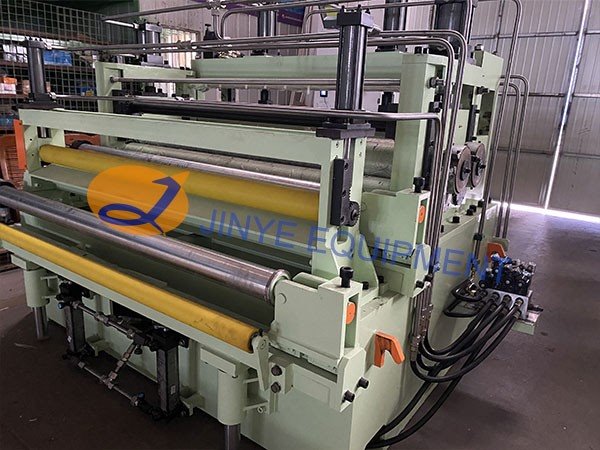
The main components of a Light Gauge Slitting Line include an uncoiler, which holds and unwinds the large coil; a slitting section, where the cutting blades are located to divide the coil into strips; and a recoiler, which rewinds the individual strips into smaller coils. These lines are engineered for high - speed and precise slitting operations, ensuring that the strips produced meet strict dimensional and quality requirements.
Magnetic Permeability and Its Significance
Magnetic permeability is a measure of how easily a material can be magnetized. Materials with high magnetic permeability, such as iron and some steels, can be strongly magnetized and are often used in applications where magnetic fields need to be concentrated or controlled, like in transformers and electric motors. On the other hand, materials with low magnetic permeability, such as aluminum, copper, and some non - ferromagnetic steels, are difficult to magnetize.
In the context of slitting operations, magnetic permeability can affect several aspects of the process. For example, in some slitting lines, magnetic systems may be used for guiding the material or for holding the strips during the recoiling process. If the material has a low magnetic permeability, these magnetic - based systems may not work effectively.
Can a Light Gauge Slitting Line Slit Low - Magnetic - Permeability Coils?
The short answer is yes, a Light Gauge Slitting Line can be used for slitting coils with a low magnetic permeability. However, there are some considerations and potential adjustments that need to be made.
Mechanical Cutting
The slitting process in a Light Gauge Slitting Line is primarily a mechanical cutting operation. The cutting blades apply pressure to the coil, shearing it into strips. This mechanical action is not directly affected by the magnetic permeability of the material. As long as the material has suitable mechanical properties, such as hardness and ductility, the slitting blades can effectively cut through it.
For example, aluminum and copper are common materials with low magnetic permeability. They are relatively soft and ductile, which makes them suitable for slitting on a Light Gauge Slitting Line. The key is to select the appropriate cutting blades and set the cutting parameters correctly to ensure clean and precise cuts.

Guiding and Handling
As mentioned earlier, some slitting lines may use magnetic systems for guiding the material or holding the strips during recoiling. When dealing with low - magnetic - permeability materials, these magnetic systems may need to be replaced or modified.
For guiding the material, alternative methods such as mechanical guides or optical sensors can be used. These systems rely on physical contact or visual detection to ensure that the coil is fed into the slitting section accurately. During the recoiling process, mechanical clamping devices can be used instead of magnetic holding systems to secure the strips and prevent them from shifting.
Lubrication and Cooling
Another aspect to consider is the lubrication and cooling of the cutting blades. Materials with low magnetic permeability may have different frictional properties compared to ferromagnetic materials. Therefore, the type and amount of lubricant used may need to be adjusted to reduce friction and heat generation during the slitting process. This helps to prolong the life of the cutting blades and improve the quality of the slit strips.
Applications of Light Gauge Slitting Lines for Low - Magnetic - Permeability Materials
There are many industries that require the slitting of low - magnetic - permeability materials. Here are some examples:
Electronics Industry
Aluminum and copper are widely used in the electronics industry for manufacturing printed circuit boards (PCBs), cables, and connectors. A Light Gauge Slitting Line can be used to slit these materials into narrow strips of the required width, which are then further processed into various electronic components.
Automotive Industry
In the automotive industry, non - ferromagnetic materials such as aluminum are used for manufacturing body panels, engine components, and heat exchangers. Slitting these materials into precise strips is an important step in the production process. A Light Gauge Slitting Line can provide the high - precision and high - speed slitting capabilities needed to meet the automotive industry's strict quality and production requirements.
Packaging Industry
Materials like aluminum foil, which has low magnetic permeability, are commonly used in the packaging industry. A Light Gauge Slitting Line can slit large rolls of aluminum foil into smaller, more manageable widths for packaging various products, such as food, pharmaceuticals, and consumer goods.
Advantages of Using a Light Gauge Slitting Line for Low - Magnetic - Permeability Materials
Using a Light Gauge Slitting Line for slitting low - magnetic - permeability materials offers several advantages:
Precision
Light Gauge Slitting Lines are designed to provide high - precision slitting. They can produce strips with tight tolerances in width and thickness, ensuring that the final products meet the required specifications. This is crucial for industries where dimensional accuracy is critical, such as the electronics and automotive industries.
Efficiency
These slitting lines are capable of high - speed operation, which increases productivity and reduces production time. The continuous slitting process allows for large volumes of material to be processed quickly, meeting the demands of mass production.
Customization
A Light Gauge Slitting Line can be customized to meet the specific requirements of different materials and applications. The cutting blades can be selected based on the material's properties, and the slitting parameters can be adjusted to optimize the slitting process. This flexibility makes it suitable for a wide range of low - magnetic - permeability materials.
Conclusion
In conclusion, a Light Gauge Slitting Line can indeed be used for slitting coils with a low magnetic permeability. While there are some considerations and potential adjustments related to guiding, handling, and lubrication, the mechanical cutting process remains effective. With the right selection of equipment, cutting blades, and process parameters, a Light Gauge Slitting Line can provide high - precision and efficient slitting solutions for a variety of low - magnetic - permeability materials.
If you are in the market for a Light Gauge Slitting Line for slitting low - magnetic - permeability materials, or if you have any questions about our products, please feel free to contact us. We are a leading supplier of Steel Sheet Slitting Line, Slitting Lines, and Precision Slitting Line, and our team of experts is ready to assist you in finding the best solution for your needs. Let's start a conversation about your slitting requirements and explore how our equipment can help you achieve your production goals.
References
- "Metalworking Handbook", McGraw - Hill
- "Manufacturing Engineering and Technology", S. Kalpakjian and S. Schmid